


Once the growing season ends, winter approaches fast in the Midwest. Take the necessary steps to protect your outdoor haven so it will return to vibrant health next spring.
How can you prepare your landscape to withstand the harshness of winter?
Let’s look at seven ways to protect your lawn, trees, and shrubs during the cold months ahead. As your grandma always said, “An ounce of prevention is worth a pound of cure!”
1. Protect From Animals

As the mercury drops and the ground gets blanketed in snow, proper forage is harder to come by. This means that animals such as rabbits and deer must get creative in their menu choices. Your landscape becomes their salad bar. They particularly savor young, thin-barked trees such as birch, crabapple, mountain ash, honey locust, willow, and oak.
How do you protect your trees and shrubs from nibbling critters? Tree wrap is a great option. Several varieties are available at your home improvement store, and they work for most wintertime pests. A good rule of thumb is to wrap trees by Thanksgiving and remove the wrap by Easter.
Read more in our article ‘5 Ways to Protect Your Shrubs from Rabbits This Winter’.
2. Guard Against the Elements: Wind
Wind is a constant in the Rockford, IL, area regardless of the season. Winter winds, in particular, can whip and damage tender plants such as Japanese maples. Harsh winds can also speed up transpiration in evergreens like arborvitae, yews, and boxwoods.
One way to protect plants exposed to strong winter winds is to create a wind barrier. Drive stakes into the ground just outside the plant’s root ball and then wrap the burlap around the stakes. This also protects more sensitive specimens (like some ornamental or fruit trees) should the temperatures drop dangerously low.
And remember: just because the temperatures are cooler doesn’t necessarily mean your plants no longer need routine watering. It is important to supplement water for your landscape right up till the ground freezes.
3. Guard Against the Elements: Sun
Winter sun can be deceiving. While it may not feel especially warm outside, the sun’s rays can still damage exposed bark on young tree trunks. One common side effect of this is sunscald.
The cracks caused by sunscald are dangerous for trees. If the cracks reach the tree’s cambium, the damage may be irreversible. Pests and disease will have direct access to the innermost layers and can cause permanent damage—even death!
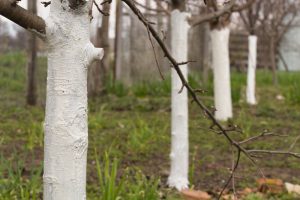 How to Prevent Sunscald?
You can prevent sunscald by applying white, breathable paint to the southwest side of the trunk. White paint reflects sunlight and helps prevent the bark from overheating. Pay special attention to thin-barked trees, which are most prone to this problem.
A second method of prevention is to wrap the tree to block sunlight. Use a light-colored wrap, such as white or kraft paper, to help reflect the sun. Plastic tree guards are also available for this purpose.
A more permanent solution would be to plant a source of shade nearby (such as an evergreen shrub). This would reduce direct sunlight and prevent the bark from warming up.
A last word of caution is to avoid over-pruning before winter. This would expose more of the tree to sunlight than necessary.
Note: Sunscald can be confused with frost cracking. The appearance is similar, but the damaged area of frost crack goes much deeper. It is caused by extreme temperature fluctuations (e.g. 40 above to subzero). Frost cracks extend to the tree’s stem and may or may not heal themselves.
4. Prevent Disease
What about protecting your lawn for winter?
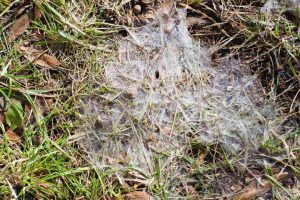 Debris left on your grass and around plants can harbor disease-causing spores and insects. Removing fallen leaves, branches, and dead plant material before the snow falls minimizes the risk of disease outbreaks when spring arrives.
One such plant disease is snow mold. Snow mold is a type of fungus that can potentially take a healthy lawn and cause severe damage. The disease often begins in October or November, so it is imperative to take measures to prevent it long before winter sets in.
The best means of defense is to prevent snow mold from ever happening through good lawn care habits.
5. Protect Your Drainage System
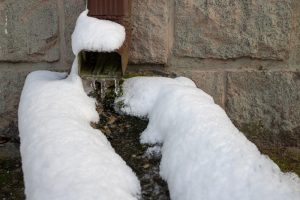 Before winter sets in, it’s important to prepare your drainage system to handle the freeze-thaw cycle that’s on the way. Downspouts, in particular, need some extra attention to prevent water issues once the snow begins to melt.
When snow piles up around the outlets of downspouts, it can freeze solid, turning into ice that blocks water from draining properly. This can lead to water backing up near your foundation, which could cause significant damage.
To prevent this, take some time now to mark key drainage areas around your property, especially the downspout outlets. Keep these areas free from large snow piles throughout the winter. Keeping these spots clear will help your drainage system work as it should when the snow starts to melt.
6. Minimize Plow Damage
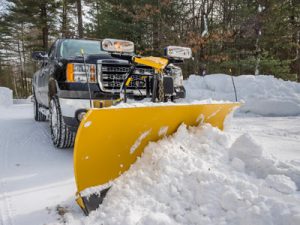 Plow trucks can leave a path of destruction in their wake. Installing plow stakes is a safe and effective way to help guide the plow away from your grass and landscaping.
We recommend wood or fiberglass driveway snow markers, as any other kind could result in injury. Make sure they are bright and clearly visible.
Snow stakes should be installed long before the ground freezes, ideally in October here in the Midwest. They should be placed six to twelve inches away from your road or driveway and every ten to fifteen feet. This will give plenty of room for the snowplow to navigate your area without damaging your stakes or yard.
Pre-drilling your holes will make installation a breeze. If you do not own a staking tool, you can use a screwdriver or cordless drill to make holes for the plow stakes. Make sure they are at least two to four inches deep to ensure these markers will withstand the winter ahead.
7. Avoid Salt Damage
A common cause of plant and turf damage in the winter is sidewalk salt. Symptoms of sodium chloride overdose can range from yellowing foliage to death of the plant. How can you prevent this?
We recommend using calcium chloride or magnesium chloride-based de-icing products whenever possible. These are much less harsh on vegetation.
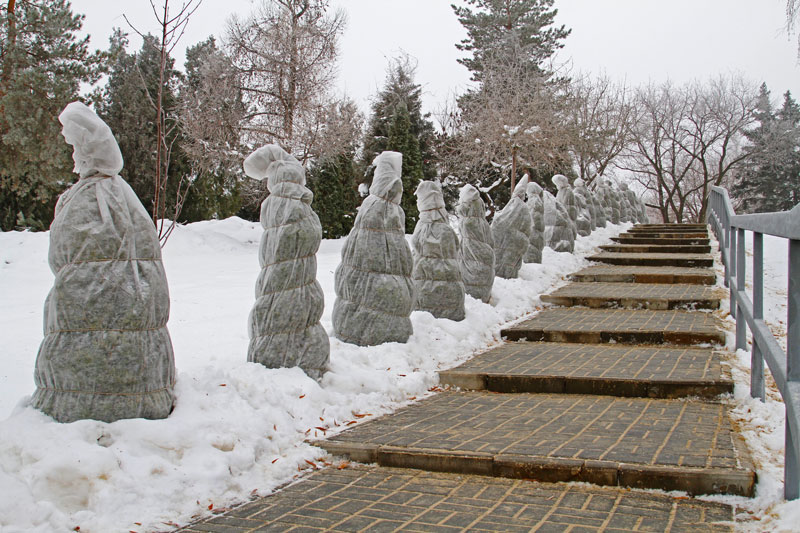 Bushes in commercial areas or along busy streets are particularly susceptible to salt damage due to municipal plows.
If you have tender plants that are near the road, consider wrapping them in burlap. (Bonus: this also doubles as protection from deer and rabbits.)
Winter Preparation Is Essential
Preparing your landscaping for winter is essential to ensure your lawn, trees, and shrubs stay healthy and vibrant through the colder months. By protecting against animals, wind, sun, disease, plow damage, and salt, you can help your landscape withstand harsh winter conditions and emerge beautifully in the spring.
Implementing these preventative measures will preserve the aesthetic appeal of your outdoor space and promote the long-term health of your plants. Remember, a little effort now can save you a lot of work and heartache later.
Contact M2 Landscaping if you need assistance with winter preparation. Enjoy the peace of mind that comes with knowing your yard is well cared for, even in the toughest weather.